
How to Effectively Command an Army: Follow Command Structures for Strategic Success
Master the military chain of command. Learn how to command an army, follow command protocols, and lead with discipline and strategic efficiency.
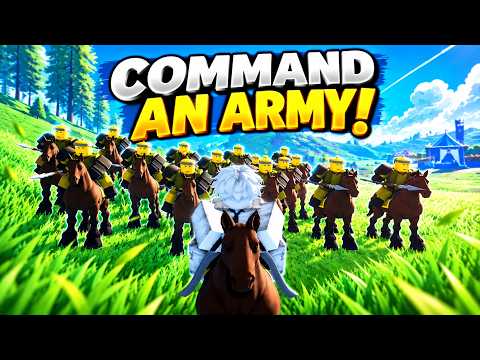 Official mediaMaster the military chain of command. Learn how to command an army, follow command protocols, and lead with discipline and strategic efficiency.YouTube
 To lead a force effectively, one must first understand the foundational hierarchy that keeps large organizations from collapsing into chaos. If you want to command an army follow command protocols to ensure that every order is executed with precision and every soldier knows their role. Mastering the ability to command an army follow command structures is not just about giving orders; it is about respecting the flow of authority that enables rapid decision-making in high-pressure environments. Whether you are a new recruit or a seasoned strategist, understanding the "ladder" of authority is the first step toward true leadership.
The Fundamentals of the Chain of Command
The chain of command is the backbone of any functional military organization. It is defined as a clear line of authority that determines who gives orders and who receives them. Without this system, communication would become a tangled web of conflicting instructions, leading to disaster on the battlefield or in complex operations.
Think of the chain of command as a ladder. At the very top sits the Commander in Chief—in the United States, this is the President. Directly below this role are high-ranking officers, followed by junior officers, and finally, the enlisted service members who form the core of the force. Information and decisions flow downward, while reports, questions, and specific concerns move upward.
This system ensures that the right people are making the right decisions at the right time. For example, a private with a logistical issue does not seek out a general; instead, they report to their immediate supervisor, who handles the matter or passes it further up if necessary. This keeps the lines of communication organized and prevents leadership at the top from being overwhelmed by minor tactical details.
The Benefits of Hierarchy
| Benefit | Description | Impact on Operations |
|---|---|---|
| Order and Discipline | Establishes clear roles and reporting lines. | Reduces confusion and prevents insubordination. |
| Rapid Decision-Making | Centralizes authority for emergency situations. | Allows for split-second reactions during crises. |
| Enhanced Teamwork | Assigns specific jobs to every individual. | Ensures all aspects of a mission are covered. |
| Mutual Respect | Acknowledges the experience and rank of leaders. | Builds a culture of professional deference. |
Understanding Military Ranks and Roles
To effectively command an army follow command structures by first learning the distinction between different rank categories. The military is generally divided into two main groups: Officers and Enlisted Members. Each group has a distinct purpose, and understanding these differences is vital for anyone looking to integrate into or lead a military unit.
Officers are the planners and the decision-makers. They hold commissions and are responsible for the broad strategic goals of a mission. Ranks such as Lieutenant, Captain, and General fall into this category. They are expected to lead by example, providing the vision and the orders that drive the unit forward.
Enlisted members, on the other hand, are the specialists and the "boots on the ground" who carry out the day-to-day tasks. However, within the enlisted ranks, there is a sub-category of leadership known as Non-Commissioned Officers (NCOs), such as Sergeants and Chiefs. These individuals are the bridge between the high-level planners and the tactical executors.
Rank Comparison Table
| Category | Primary Responsibility | Common Ranks |
|---|---|---|
| Commissioned Officers | Strategic planning, mission oversight, and high-level command. | Lieutenant, Captain, Major, Colonel, General |
| Non-Commissioned Officers | Tactical execution, training recruits, and supervising small teams. | Sergeant, Staff Sergeant, Chief Petty Officer |
| Enlisted Personnel | Specialized technical tasks, combat roles, and direct labor. | Private, Airman, Seaman, Specialist |
The Strategic Importance of Order and Discipline
Discipline is the glue that holds a military unit together. When a leader attempts to command an army follow command principles to instill a sense of duty in their subordinates. Discipline is not just about punishment; it is about the habit of obedience and the reliability of every member of the team.
In a high-stakes environment, there is no time for debate when an order is issued. The chain of command facilitates this by ensuring that every member has been trained to respect the position of their superior. This respect is often earned through years of service and the demonstration of competence, which is why the ranking system is so heavily emphasized.
Community reports and player experiences in strategy simulations often highlight that units with higher "discipline" stats perform better under pressure. In the real world, this translates to reduced "friction"—a term used by military theorists to describe the natural delays and errors that occur during war.
Elements of Military Discipline
- Promptness: Executing orders immediately without hesitation.
- Clear Communication: Relaying information accurately up and down the chain.
- Accountability: Taking full responsibility for the outcome of one's actions.
- Uniformity: Adhering to standards of dress and behavior to foster unity.
Communication Protocols: Moving Up and Down the Chain
One of the most common mistakes made by those new to a hierarchical system is "jumping the chain." This occurs when a subordinate bypasses their immediate supervisor to speak with a higher-ranking official. To command an army follow command communication protocols strictly to maintain the integrity of the system.
Jumping the chain can cause significant problems. It undermines the authority of the immediate supervisor and can lead to the higher-ranking officer receiving incomplete or out-of-context information. Proper communication follows a specific path:
- Identify the Issue: Determine if the problem can be solved at the current level.
- Report to Immediate Superior: The first point of contact should always be the direct supervisor.
- Wait for Resolution: Allow the supervisor time to address the concern or move it upward.
- Formal Escalation: If the issue remains unresolved, the supervisor will facilitate the move to the next "rung" on the ladder.
Communication Flow Model
| Step | Direction | Action |
|---|---|---|
| Order Issuance | Downward | General issues a mission objective to Colonels. |
| Operational Planning | Downward | Captains break objectives into specific tasks for Sergeants. |
| Execution | Horizontal | Enlisted members work together to complete the task. |
| Feedback/Reporting | Upward | Sergeants report progress or obstacles to Captains. |
| Final Briefing | Upward | Officers inform high-level command of mission completion. |
Military Customs and Traditions
Beyond the strict legal requirements of the chain of command, the military is steeped in customs and traditions that reinforce the hierarchy. These traditions serve as constant reminders of the respect owed to the structure and the history of the service.
Saluting is perhaps the most recognizable custom. It is a sign of mutual respect, given by a lower-ranking member to a higher-ranking officer. It is not a gesture of subservience but an acknowledgment of the office and the responsibility that the officer carries.
Another critical tradition involves fraternization rules. These rules prevent officers and enlisted members from having close personal relationships that could lead to favoritism or the appearance of a conflict of interest. By maintaining professional boundaries, the military ensures that decisions are made based on merit and mission requirements rather than personal bias.
Key Military Traditions
| Tradition | Purpose | Significance |
|---|---|---|
| Saluting | Shows respect for rank. | Reinforces the hierarchy daily. |
| Reveille | Morning flag ceremony. | Signals the start of the duty day and honors the nation. |
| Taps | Honoring fallen soldiers. | Provides a somber reminder of the ultimate sacrifice. |
| Change of Command | Formal transfer of authority. | Ensures a seamless transition between leaders. |
Leadership Development: Preparing the Next Generation
Every great leader started as someone who followed orders. To eventually command an army follow command instructions today to build the habits necessary for future success. Leadership is a skill that is cultivated over time through the observation of superiors and the gradual assumption of responsibility.
Aspiring leaders are encouraged to develop a set of core habits. These include taking initiative, communicating with clarity, and always respecting the authority of those above them. For more information on how these structures are formally defined, you can review the official U.S. Army hierarchy and rank descriptions to see how responsibility scales with rank.
When a service member demonstrates that they can be trusted to follow orders perfectly, they are given the opportunity to lead others. This progression ensures that by the time someone reaches a high-ranking position, they have a deep, lived understanding of what it feels like to be at every level of the ladder.
Core Leadership Habits for Success
| Habit | Description | Why It Matters |
|---|---|---|
| Initiative | Seeing what needs to be done and doing it. | Reduces the need for constant supervision. |
| Clarity | Speaking and writing in a way that is easy to understand. | Prevents mistakes caused by confusion. |
| Resilience | Staying focused and calm during stressful situations. | Inspires confidence in subordinates. |
| Integrity | Doing the right thing even when no one is watching. | Builds trust within the unit. |
Strategic Application: Lessons Beyond the Battlefield
While these principles are born from military necessity, they apply to almost any large-scale strategic endeavor. In the corporate world, for instance, a CEO acts as the Commander in Chief, while department heads act as officers and project managers act as NCOs. If a business wants to command an army follow command structures to ensure that the CEO's vision is accurately translated into daily tasks.
In gaming and strategy simulations, players often find that "zerging" or disorganized attacking fails against a disciplined opponent who uses a structured approach. The ability to coordinate multiple units toward a single goal requires a hierarchy that can process information and react to changes in the environment.
Ultimately, the chain of command is about efficiency. It is a system designed to maximize the potential of every individual while ensuring that the collective force moves as one. By respecting the ladder, adhering to communication protocols, and fostering a culture of discipline, any organization can achieve its strategic objectives.
Frequently Asked Questions
What happens if I bypass the chain of command?
Bypassing the chain of command, often called "jumping the chain," can lead to administrative action or disciplinary measures. It creates confusion, as your immediate supervisor may be unaware of the issues you are facing, and the higher-ranking officer may not have the tactical context to help you. To effectively command an army follow command protocols to ensure your voice is heard through the proper channels.
Why do officers and enlisted members have different roles?
Officers are primarily focused on the "why" and the "what" of a mission—the strategic planning and resource management. Enlisted members are focused on the "how"—the technical execution and physical labor required to complete the mission. This division of labor allows for specialized expertise at every level of the organization.
How can I improve my leadership skills within a hierarchy?
The best way to become a leader is to be an excellent follower first. By demonstrating that you can command an army follow command instructions with precision and reliability, you prove to your superiors that you are ready for more responsibility. Focus on clear communication, taking initiative, and respecting the traditions and customs of your unit.
Related Guides
Command an Army Hold Command: The Ultimate Strategy Guide and Latest Codes for September 2026
Master Roblox Command an Army with our comprehensive guide. Get the latest codes, unit strategies, and tips to command an army and hold command effectiv...
Command an Army Meta Guide: Best Units, Counter Strategies, and Winning Tips
Master the Command an Army meta with our complete guide on unit counters, team building, and leveling strategies for the popular Roblox strategy game.
How to Command an Army Capture Points in Command An Army for Maximum Gains
Master the battlefield in Command An Army. Learn how to command an army, capture points, and boost your income with our expert strategy guide.
Mastering Command an Army Formations: The Ultimate Strategy Guide for New Units
Learn how to master Command an Army formations with our comprehensive guide on new units, block damage stats, and tactical battlefield strategies.